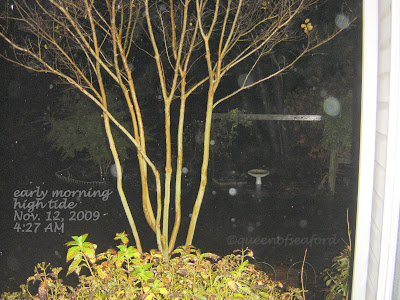
A native tree to most of the states, the Sassafras albidum is very recognizable. The kids always knew the tree by the three different leaf shapes. This tree has the oval leaf, a tri-lobed leaf and the one the kids recognized immediately, the mitten leaf.


Do you like root beer? The origins of this soda come from the root of this tree. You can smell the root beer flavor by crushing small twigs or roots. Additionally tea can be made from the root. Are you a fan of gumbo? This Cajun dish has an ingredient called filé. Filé comes from the dried, ground leaves of the sassafras tree. Cherokee, Choctaw and Chippewa have many uses for this tree, from tea to spices flavoring their foods. The Spanish explorers brought the tree back to Europe in the 1500's.

Though this tree has a wide range, zones 4- 9, the tree does better in sunnier locations. The Sassafras sprouts from roots and forms groves, crowding out other trees. There is an allopathic feature that keeps the grove clear of other plant material. It is a dioecious tree and the seed production begins on mature (10 years old) trees and it can live up to 150 years. The seeds mature in one year. Flowers appear in early spring and are quite showy.

This member of the Laurel family will grow to a height of 50 feet; it is a fast grower and has softwood. Deer like the twigs in the winter and the drupes/berries are a good food source for birds. The fall color is a glorious range of yellow to orange to reds. The inner bark is cinnamon in color and outer bark has kind of twisted deep ridges. The growth pattern is irregular, twisting a bit and the twigs form a 60 degree angle with main stem.

Floridata has some good history
MOBOT - some nice photos and good information
NC State- quick reference
Virginia Tech- another quick reference
Forestry Department, Silvics manual—in depth information, no photos
University of Florida - easy to read detailed information
USDA Plant Database- good list of additional web links
Ohio State – succinct information
Remember all photos can be clicked on to enlarge. I am continuing to update previous tree posts with photos of fall color.

Next week's tree- Chinese Pistache